
 Aimer Saint Joseph

L'audace d'être soi face aux opposants

07 Portes, levez vos frontons, + élevez-vous, portes éternelles : qu'il entre, le roi de gloire !
08 Qui est ce roi de gloire ? + C'est le Seigneur, le fort, le vaillant, le Seigneur, le vaillant des combats.
09 Portes, levez vos frontons, + levez-les, portes éternelles : qu'il entre, le roi de gloire !
10 Qui donc est ce roi de gloire ? + C'est le Seigneur, Dieu de l'univers ; c'est lui, le roi de gloire.
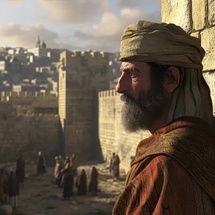
Néhémie travaille pour le roi Artaxerxes et pour le Roi des Rois
Au chapitre 4, ses opposants le raillent et soulèvent déjà le problème majeur :
34 « Que font donc ces misérables Juifs ? Ne sont-ils pas en train de réparer pour leur compte ? Vont-ils offrir des sacrifices ? Vont-ils terminer en un jour ? Feront-ils revivre ces pierres à partir de monceaux de décombres ? Elles sont calcinées ! »
35 Tobie l’Ammonite se tenait à ses côtés ; il dit : « À construire comme cela, si un renard y montait, il démolirait leur muraille de pierres ! »
Ce Roi des Rois est celui qui donne à Néhémie et à son entreprise de construction tout son sens.
17 Mais ni moi, ni mes frères, ni mes serviteurs, ni les hommes de garde qui me suivaient ne quittions nos vêtements ; chacun gardait son arme.
Néhémie va-t-il devenir roi?
Voici ce qu'on écrit à Néhémie pour le piéger (Nh 6, 6-7) :
On entend dire parmi les nations – et Gashmou le confirme – que toi et les Juifs songeriez à vous révolter. Ce serait pour cette raison que tu reconstruis le rempart ; et, selon ces dires, c’est toi qui deviendrais leur roi.
07 Tu aurais même mis en place des prophètes pour proclamer à ton sujet dans Jérusalem : “Il y a un roi en Juda !” Et maintenant ces bruits-là vont parvenir aux oreilles du roi. Viens donc à présent, que nous tenions conseil ensemble.
Lorsque Jésus entrera dans Jérusalem, les mêmes pièges lui seront tendus. Mais il est le roi. " Mon royaume n'est pas de ce monde", dira-t-il à Ponce Pilate. Artaxerxes ou Rome, où les empires actuels, n'ont pas la puissance pour l'arrêter, car son audace est celle de sauver ce qui était perdu. Néhémie l'annonçait, Jésus le fait. Le Roi de Gloire entre dans Jérusalem, dans la Jérusalem de nos coeurs. Maintenant, nous pouvons refaire tout ce raisonnement avec l'analogie Jérusalem/coeur : le Roi de gloire peut-il entrer dans nos coeurs, les remparts contre les faux dieux et les ennemis sont-ils détruits? Faut-il rebâtir, armes à la main? Que devons-nous construire? De fait, construire est la meilleure façon d'être soi, et c'est peut-être simplement ce que le Roi des rois nous demande.
AC
English version
Every year, the Feast of Christ King of the Universe recalls the victory celebrated throughout the liturgy. “Let the King of Glory come in!”, as Psalm 24 proclaims. “Lift up your heads, O eternal gates!” But Nehemiah faces a twofold opposition that closes in like a clasp, like a trap: there are no longer any gates or city walls in Jerusalem, and the king is Artaxerxes, of whom he is the cupbearer.
Lift up your heads, O gates!
And be lifted up, O ancient doors,
that the King of glory may come in.
8 Who is this King of glory?
The Lord, strong and mighty,
the Lord, mighty in battle!
9 Lift up your heads, O gates!
And lift them up, O ancient doors,
that the King of glory may come in.
10 Who is this King of glory?
The Lord of hosts,
he is the King of glory!
Nehemiah works for King Artaxerxes and for the King of Kings
Nehemiah, a Jew in exile in Babylon, rose to a high and trusted position within the administration. King Artaxerxes granted him permission to go and rebuild the walls of his home town. Artaxerxes had therefore realised that this Jew was working for spiritual purposes, and that his aim was not to re-establish a temporal kingdom in Jerusalem. Although…
In chapter 4, his opponents mock him and already raise the major issue:
When Sanballat heard that we were rebuilding the wall, he became angry and was greatly incensed. He ridiculed the Jews, 2 and in the presence of his associates and the army of Samaria, he said, “What are those feeble Jews doing? Will they restore their wall? Will they offer sacrifices? Will they finish in a day? Can they bring the stones back to life from those heaps of rubble—burned as they are?”
3 Tobiah the Ammonite, who was at his side, said, “What they are building—even a fox climbing up on it would break down their wall of stones!”
It is this King of Kings who gives Nehemiah and his building project their full meaning.
23 Neither I nor my brothers nor my men nor the guards with me took off our clothes; each had his weapon, even when he went for water.
: “It is reported among the nations—and Geshem says it is true—that you and the Jews are plotting to revolt, and therefore you are building the wall. Moreover, according to these reports you are about to become their king 7 and have even appointed prophets to make this proclamation about you in Jerusalem: ‘There is a king in Judah!’ Now this report will get back to the king; so come, let us meet together.”
My kingdom is not of this world : build and be yourself!
When Jesus enters Jerusalem, the same traps will be set for him. But he is the King. “My kingdom is not of this world,” as he tells Pontius Pilate. Neither Artaxerxes nor Rome, nor any of today’s empires, have the power to stop him, for his audacity lies in saving what was lost. Nehemiah foretold it; Jesus is fulfilling it. The King of Glory enters Jerusalem—the Jerusalem of our hearts. Now, we can apply this whole line of reasoning using the Jerusalem/heart analogy: can the King of Glory enter our hearts? Have the ramparts against false gods and enemies been destroyed? Must we rebuild, with weapons in hand? What must we build? In fact, building is the best way of being oneself, and perhaps that is simply what the King of kings is asking of us.
AC
 Les volontaires à la reconstruction : livre de Néhémie, chapitre 3, (also in english, see below)
